Is Meta Muse Wonder AI worth the subscription cost for casual users?
An evaluation of Meta's Muse Wonder AI subscription costs, analyzing whether the pricing makes sense for everyday casual users.
Meta’s introduction of Muse Wonder AI models has changed the conversation around digital assistants and monetization. While the core personal agent app is free, advanced capabilities require a tiered subscription ranging from $20 to $100 per month for consumers, with higher prices for developer tools. For casual users who rely on AI for simple inquiries, chatting, and basic tasks, this pricing structure raises the question of whether the investment delivers more value than free alternatives.
Understanding the Meta Muse Wonder ecosystem
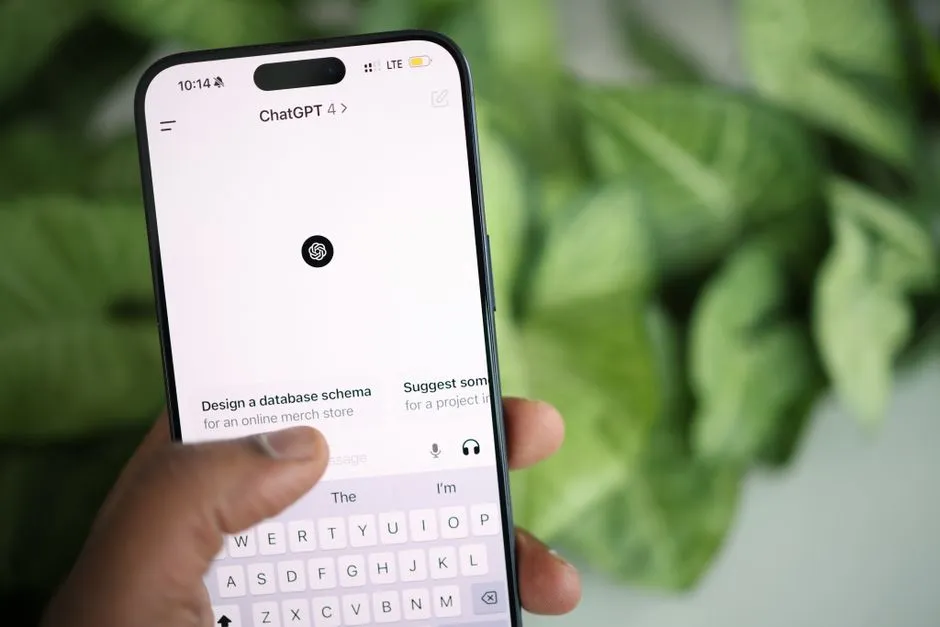
The Muse Wonder model series, often discussed alongside its developer-focused sibling Muse Wonder Full, was developed by Meta to improve the reliability of personal and professional digital assistants. This shift is part of Meta’s push for integrated AI agents to reshape how users interact with social media and daily apps. Meta's leadership has noted that previous generations of AI agents frequently stumbled on real-world multi-step tasks, such as coordinating dinner reservations or checking complicated availabilities. Muse Wonder was specifically trained to handle these roadblocks by attempting alternative approaches autonomously rather than stalling or constantly prompting the user for clarification.
For the average consumer using the Muse personal agent app, these improvements make the experience smoother. However, these advanced features and safety safeguards against cyber misuse are tied to paid subscriptions. While the app climbed the Apple App Store charts upon release as a free download, casual users found that utilizing Meta's frontier technology requires a subscription. This creates a separation between casual users on the free tier and power users paying for enhanced agent workflows.
Cost breakdown and consumer value

The cost of Meta's ecosystem varies depending on the use case, but standard consumer subscriptions are typically $20 a month, with higher tiers reaching $100 for heavy usage. For a casual user who only opens an AI assistant a few times a week to draft an email, summarize an article, or answer a trivia question, a monthly fee is a significant expense. When comparing these costs to the AI productivity apps actually worth the investment, justifying a $20-plus monthly charge requires consistent, heavy use of the agent's advanced capabilities.
Furthermore, the pricing strategy treats monetization as a live experiment; consumers are essentially paying to test frontier-class agent workflows that are still evolving. While developers and coders can justify these costs through productivity gains—such as automated multi-file coding and terminal tasks—casual users rarely encounter workflows complex enough to require advanced problem-solving. For everyday tasks, the performance difference between a free tier and a $20 monthly subscription may not be substantial enough to warrant the charge.
Weighing features against casual needs
Meta Muse Wonder Subscription for Casual Users
Pros
- +Enhanced active memory and superior active focus
- +Autonomously handles complex, multi-step digital tasks
- +Deep integration with third-party tools and communications
Cons
- −High monthly subscription cost ($20–$100/month) for simple queries
- −Unnecessary complexity for basic chatting and drafting
- −Potential privacy friction regarding personal data and message access
When evaluating if Muse Wonder is worth the cost, users need to weigh the technical upgrades against their daily habits. The paid model offers enhanced active memory, superior active focus, and deeper integration with personal communications and third-party tools. However, these features are primarily for productivity-heavy environments where an AI needs to navigate insurance claims, interpret lengthy leases, or execute multi-step digital chores without supervision. Casual users rarely delegate tasks of this complexity to a mobile assistant.
Additionally, casual users value predictability and simplicity, whereas agentic AI models can introduce friction regarding data privacy and unexpected autonomous actions. User feedback surrounding the Muse app has highlighted concerns over how personal messages are accessed, prompting Meta to clarify authorization processes and improve user education. For a user who wants a straightforward chatbot experience, paying a monthly fee for complex agent autonomy adds both financial overhead and unnecessary complexity. Unless an individual relies heavily on automated digital orchestration for daily routines, the free tier or other free options remain more practical.
References

Can low-end smartphones handle Meta's new Muse Wonder AI features natively?
Best train routes for visiting zoos near major UK cities

Related Posts
 TECH
Best Valorant aim training tools and software for high-level play in 2027
A comprehensive guide to the top aim trainers, in-engine practice routines, and mechanical methodologies used to optimize precision in high-level Valorant play.
 TECH
Valorant Champions Tour Pacific Cup 2027: Venue details and tournament format analysis
An in-depth look at the Valorant Champions Tour Pacific Cup 2027, covering the venue announcement in Manila, the restructured tournament format, and open qualification pathways.
Popular Posts
Valorant Champions Tour Pacific Cup 2027: Venue details and tournament format analysis

Accessible seating and travel logistics for international VALORANT events in Seoul

Best streaming platforms and schedule optimization tips for watching Seoul Masters VALORANT games